Community
Mental Health Awareness Week 2025 | Reflection #2
Mastered graduate Richard Wade reflects on his professional life now five years into his career as an independent leadership coach and the value of the communities he has benefited from.
Community
Feeling a sense of belonging and community has always been important to me in my professional life. During my corporate career, I valued and benefited from being part of many different groups and communities – some formal, some informal. Most commonly I found myself in communities with others who did similar roles, or with common interests both within and outside of my organisation. Often these communities would be large in number, but I’d soon find the folks that I could build deeper relationships with. These are the people that I would learn from, share challenges with, confide in and seek support. It’s only in the latter stages of my corporate career, as I learnt and understood more about mental health and wellbeing, that I consciously recognised how valuable these communities were to me.
When I was planning the transition from corporate life to that of an independent coach, I was very mindful that I would be leaving behind many of the communities that I had been part of. Given that this transition for me happened to coincide with the COVID pandemic, lockdown and a move to a virtual world, this could potentially have been an even greater challenge. In reality though, I found the transition much easier, largely because the whole world had moved virtual and all of us were suddenly faced with a new reality of having to connect in different ways.
I was starting out on my Mastered journey at the same time, and this immediately saw me part of several hugely valuable communities – from my own syndicate group of three, to my Mastered year group through to the much broader and extensive Meyler Campbell community. As I progressed through the programme, and then in due course became involved with a couple of other organisations as an associate coach, I soon found myself part of other communities, with like-minded people. Following my graduation, I became part of a supervision group and immediately benefited from the wisdom and support of fellow coaches.
As I reflect now, five years into my career as an independent Leadership Coach, I realise that being part of different communities is more important to me now than it probably ever has been. As with my time in corporate life, some are formal groups, others less so.
As a Meyler Campbell syndicate of three, five years on from our first meeting, we still meet once a quarter (and connect between meetings) to provide support, encouragement and feedback to each other. I am also hugely privileged to be part of a peer supervision group that has gone beyond pure coach supervision and involves a much deeper level of professional support for each of us. This has become a safe place where we all know we can share challenges and feel supported by others. Beyond these groups, I am also very thankful for the informal relationships that I have built with several fellow coaches.
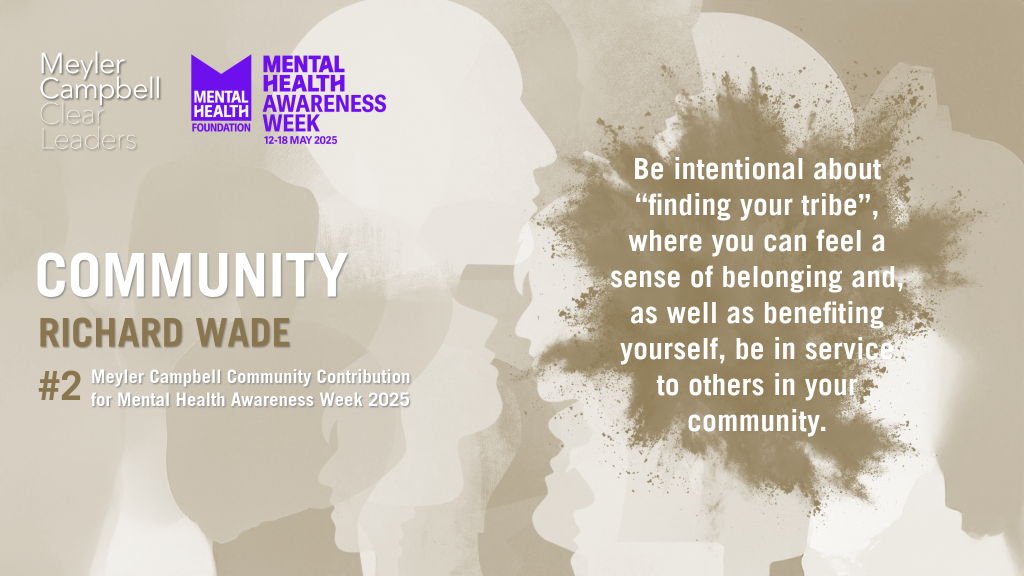
My top tip for other independent coaches is to work hard at finding your community (or communities). Be intentional about “finding your tribe”, where you can feel a sense of belonging and, as well as benefiting yourself, be in service to others in your community. Two questions to reflect on:
- Where are the people that you can engage with who will support you and help you to grow as a coach?
- Who are the folks in your professional network or circle that you can turn to, to celebrate success and call on when things get tough?
Richard has a background in HR and now runs his own Leadership Coaching business. He completed the Meyler Campbell Mastered Programme in 2021 and is an Accredited Executive Coach with the Association for Coaching.
Subscribe
Join our mailing list to be informed of the new Meyler Campbell Insight resources as they are published