Tales from Beyond: Rory Campbell
What do people do post-Mastered? In our Tales from Beyond series, graduates of our business coaching programme share their many (and varied) stories, from career changes and professional transformations to breakthroughs in their coaching practice. These stories offer a glimpse into what’s possible when leaders invest in themselves.
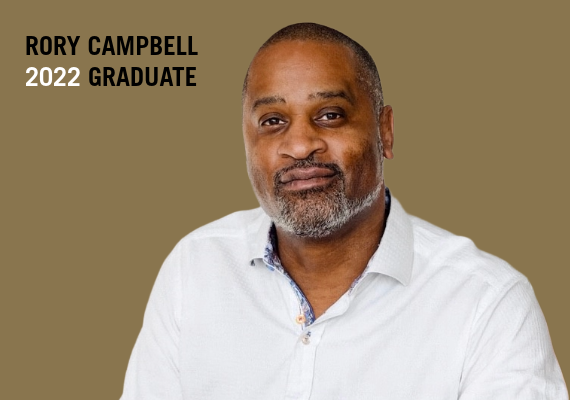
Rory Campbell shares how blending his passion for psychology, business and coaching led him to Mastered, and reflects on the liminal space he now occupies as a coach, shaped by ongoing learning, growth and new opportunities.
Before Mastered, I had already made a fairly significant professional leap – moving from senior leadership and board roles in corporate life to independent advisory work. Most of what I did revolved around leadership, culture, transformation and the human conditions that help organisations perform. Working for myself for the first time was clarifying in ways I had not entirely expected. I loved the freedom, the agency, the responsibility and, to a degree, the jeopardy – though that last one is largely the benefit of hindsight!
At that point, I did not describe myself as a coach. Early in my career, someone told me that without a particular ‘badge’ I would not progress; and something in me pushed back against that. I had always wanted to be judged by the quality of my thinking, the integrity of my work and the impact I could have – not by what I felt was a ‘club membership’ rather than a ‘differentiator of quality’. So, although much of my consulting work was already blended with elements of team and individual coaching, I preferred to call myself a management consultant or a leadership adviser, because those words felt more honest about the breadth of what I was doing.
Over time, that framing started to feel limiting as more of my conversations were explicitly about coaching. More of the work was asking me to sit with people in ways that were deeper and more personally attentive than advisory work alone. I began to understand that my resistance to calling myself a coach was not simply principled independence, but an act of self-limitation. So, rather than seeing coaching qualification as acquiring another badge, I began to see it as a chance to move closer to my original academic interest in psychology, to blend it with my interest in business, to take the craft seriously and to develop in genuine capability.
That shift, eventually, brought me to Meyler Campbell.
I will be honest: I had not heard of Meyler Campbell before I started looking seriously. I reached out to a trusted colleague who had helped me find my first coach when I took on my first board role, and she helped me think through the landscape. At times, coach development can feel a little like the wild west; it is not always easy to know where to begin, or what signals to trust, but quite quickly we centred on Meyler Campbell, largely on the strength of the tutorship and the calibre of the people who had studied there. I had my own conversations with the team, found them credible and thoughtful, and proceeded.
What surprised me most was how much I loved it.
Mastered was a genuine re-entry into study – reading, reflection, theory and proper learning again, after years in which intellectual curiosity had to compete with a busy professional life. The college-style model suited me well: three students with one tutor, with enough intimacy to be honest and enough difference to be stretched. My tutor, Alexandra Durnford, was brilliant, and the match felt right from early on; I loved her advocacy of me, her encouragement and her challenge. My fellow students were thoughtful and impressive people, and I found our sessions genuinely energising – though I would also say that being stretched towards a more disciplined, more non-directive coaching practice was not always comfortable. I had spent many years as an executive and adviser, used to having a point of view, used to diagnosing and contributing answers. Mastered asked me to test that habit quite directly; to notice when I was truly coaching and when I was, in fact, just advising from a different chair.
That question is still live for me. My sweet spot – if such a thing exists – is not a fixed point on a spectrum between coaching and consulting, or between directive and non-directive. It feels more multidimensional than that: psychology and business, role and person, individual and system. It’s also why I continue to hold first-hand business experience, as a non-executive director. It helps me have a deeper connection and understanding to the dynamic business contexts of my clients. Nonetheless, I think about the whole person as much as the function they perform; senior leaders carry ambition, identity, responsibility and pressure, and the work is to meet them there – in all of it – rather than reducing them to their job titles.
I use a phrase sometimes to describe my coaching philosophy: always run to, never run from. Towards reality, towards the difficult truth, towards the necessary decision. It is not about being tough for its own sake; it is more about positive movement, about helping people see more clearly in the middle of complexity.
I have seen what that can look like in practice. One chief executive I worked with was highly successful by every external measure – respected by investors, well regarded by her team, delivering commercially – but she was not quite feeling that success personally, and a good deal of our work moved through tricky commercial moments, stakeholder dynamics and, gradually, a stronger sense of self-recognition. Watching her begin to inspire herself – not because I gave her something she lacked, but because she could inhabit more fully what was already there – was one of the most satisfying experiences I have had as a coach. It’s breakthrough moments that both excite and fascinate me.
Since Mastered, the clearest sign of change is also the simplest. When people ask what I do, I now say: I am a coach. Without a lot of additional framing. I work with executives and executive teams to help them become more effective in what they are doing and what they are trying to achieve.
My work with The Alexander Partnership has shaped the next chapter considerably. Learning alongside and working with people who have led serious executive careers and now work with some of the world’s most exciting and demanding clients has been stretching in the best way. It has also clarified something I feel increasingly strongly about: coaching, in my context, is a business, not a vocation apart from business. Value, impact, commercial reality – these are not things to translate into; they are a fundamental part of what coaching means to me.
So, like us all, I’m still a work in progress. I’m lucky to have colleagues, clients and a community rich in learning, growth and new opportunities. Tales from Beyond could imply that I’ve left one space and arrived at another, or that I have moved beyond something. I don’t think of it that way. My current philosophical obsession offers perhaps a more fitting sense of where I am: Tales from the Liminal.
Rory Campbell is an executive coach, adviser and Non-Executive Director who works with executive leaders and teams to help them navigate complexity, sharpen judgement and create the conditions for better performance, deeper trust and wiser action. Rory graduated from the Mastered programme in 2022.
Subscribe
Join our mailing list to be informed of the new Meyler Campbell Insight resources as they are published